
FIGHT AFIB IN DEPTH
Stop Piecing Together AFib Advice Get Clear Answers Every Week
Fight AFib brings you clear, evidence-based articles from Dr. Yasser Rodriguez, a board-certified cardiac electrophysiologist. Each week, one article is free. Paid members receive two additional in-depth articles, giving them all three new articles each week.
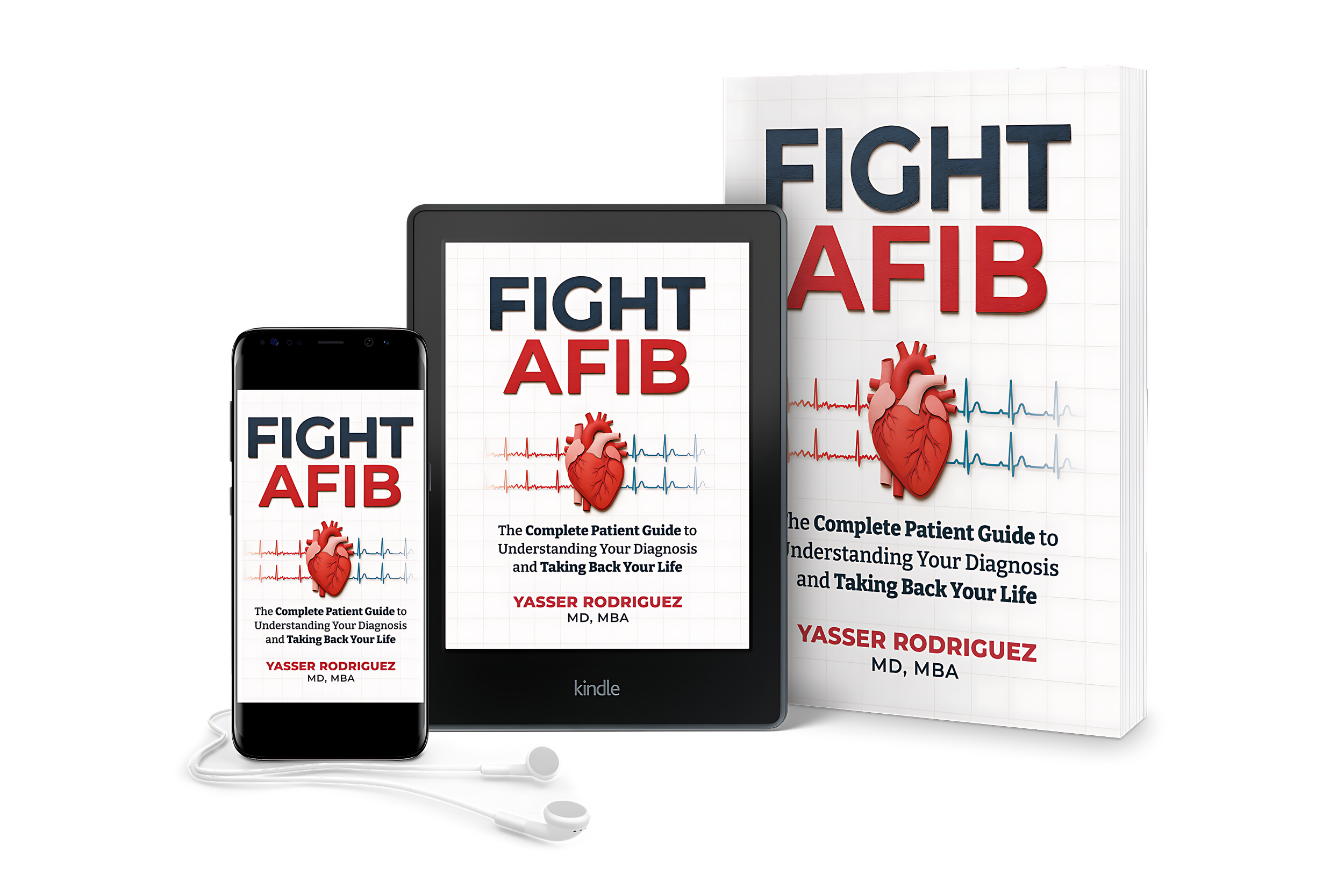
A short appointment cannot always cover everything. Fight AFib closes that gap — one clear article at a time.
AFib tends to beget more AFib. Every month without answers is a month you could’ve been building a real plan.
AFib questions rarely end when the appointment does
A diagnosis may begin with an emergency room visit, a smartwatch alert, a routine examination, or a symptom you cannot explain. Then come the questions: How serious is this? Do I need a blood thinner? When should I consider ablation? Which symptoms should send me to the emergency room? What can I change myself?
A short appointment cannot always cover everything, and searching online often produces a mixture of outdated guidance, personal anecdotes, and advice with no context. Even a helpful video may leave you wanting the evidence, the nuance, and a written explanation you can revisit later.
Fight AFib was created to close that gap. It gives patients and families one trusted place to return to for clear explanations, practical context, and better questions to bring to their own healthcare team.

Written by the specialist who answers these questions every day
Dr. Yasser Rodriguez, MD, MBA
Cardiac Electrophysiologist — Atrial Fibrillation & Complex Heart Rhythm Disorders
I am Dr. Yasser Rodriguez, a board-certified cardiac electrophysiologist focused on atrial fibrillation and complex heart rhythm disorders. I completed advanced electrophysiology training at Brigham and Women’s Hospital, a major Harvard teaching hospital, and I have authored more than 30 peer-reviewed publications and book chapters.
More importantly for this publication, I spend my clinical life listening to the questions patients ask when a diagnosis, medication, procedure, or symptom does not make sense yet. Those questions shape what I write.
Each Fight AFib article starts with a real patient concern. I then explain what the evidence shows, where uncertainty remains, and what questions may be worth discussing with your own care team. The goal is not to replace your physician. It is to help you understand the conversation.
Start with the Article Behind Our Most-Watched Video
Our most-watched Fight AFib YouTube video reached hundreds of thousands of viewers because it addressed a frightening problem: stroke warning symptoms can appear briefly, disappear, and be easy to dismiss. The accompanying article shows what the Substack adds. A video can introduce the warning. A written article gives you room to slow down, revisit the details, save the explanation, and share it with the people who need it.
Five Symptoms Your Brain Uses to Warn You Before a Stroke
Fight AFib brings you clear, evidence-based articles from Dr. Yasser Rodriguez, a board-certified cardiac electrophysiologist. Each week, one article is free. Paid members receive two additional in-depth articles, giving them all three new articles each week.
Read the Free Stroke ArticleWhat’s Inside
Understand Your AFib Diagnosis Without a Medical Degree
Fight AFib walks you through everything, from what’s actually happening inside your heart to the full range of treatment options available today, in plain, everyday language. No jargon left unexplained, and no chapter you have to skip because it feels over your head.
Understand exactly what's happening in your heart during an AFib episode, in terms that actually make sense
Compare your treatment options, including medication, ablation, LAAO, cardioversion, and pacemakers, so you understand the trade-offs before you decide
Calculate your own stroke risk using the same scoring system your doctor uses
Walk into every appointment with the right questions already written down
Separate AFib facts from AFib myths, including the pacemaker misconceptions almost every patient walks in with
Build a practical plan for the lifestyle factors that matter most, including sleep apnea, weight, alcohol, and exercise, without a single "just eat healthier" platitude
Feel confident managing a lifelong condition instead of feeling defined by it
You don’t need a medical degree to understand your own heart. You just need the right guide.
Who It’s Written For
Still wondering if this book is right for you?
Here’s who it’s written for:
Anyone who has just heard the words “you have AFib” for the first time and doesn’t know what to do next
Anyone who’s researched AFib online and ended up more confused, or more scared, than when they started.
Anyone who found out through a smartwatch alert, a routine physical, or a trip to the ER, and is still trying to make sense of it
Family members and caregivers who want to understand what their loved one is going through and how to actually help
People who are tired of leaving doctor’s appointments with more questions than answers

Why Now Matters
Stop Waiting for Your Next Appointment. Start Taking Control Today.
AFib doesn’t wait for a convenient time, and here’s what gets lost in the shuffle: AFib tends to beget more AFib. Left unaddressed, each episode can make your heart’s electrical system a little more prone to the next one.
Every month spent piecing together information from forums, or waiting until your next appointment, is a month you could’ve spent building a real plan with your care team, one based on your own risk factors and goals.
You don’t need this all figured out today. You just need to start, and Fight AFib meets you exactly where you are.
Picture where you could be in three to six months:
Walking into appointments with a clear list of questions, understanding your own stroke risk, and feeling like an active participant in your care instead of a bystander waiting for the next episode.
Questions Patients Ask Most
Frequently Asked Questions
-
Yes. While I wrote it to be especially helpful for people who are newly diagnosed, I also cover the full landscape of treatment options, including newer approaches like pulse field ablation, that even longtime patients may not have discussed with their care team yet.
-
Online forums can be a helpful place to feel less alone, but they’re also full of conflicting, outdated, or anecdotal information that can leave you more confused. I wrote this book after years of listening to the patients’ questions, so I could end the confusion and misinformation.
-
Both. I dedicate an entire chapter to practical lifestyle management, including specific, actionable tips for sleep, weight, alcohol, and exercise, not just generic advice to “eat healthier.”
-
This book is a great resource for you too. I walk through common symptoms, risk factors, and what to bring up with your doctor so you can get an accurate diagnosis instead of wondering.
-
No, and this is one of the most common mix-ups I hear from patients. A heart attack happens when blood flow to the heart muscle is blocked, while AFib is an electrical problem that causes the heart to beat irregularly. They’re both heart conditions, but I treat them completely differently, and I walk through exactly how in the book.
-
Almost certainly not. Pacemakers aren’t a standard part of AFib treatment; I typically use them only when medication slows the heart too much or after certain procedures. I dedicate a whole section to clearing up this exact misconception, since it’s one of the first questions almost every patient asks me.
-
It depends on your specific situation, and I walk through the full range of outcomes honestly in the book, including cases where procedures like ablation can significantly reduce or eliminate episodes. For most of my patients, AFib can be managed effectively with the right combination of lifestyle changes, medication, and, when appropriate, medical intervention.
-
I wrote this book specifically for patients, not for other physicians. I break down complex medical concepts using plain language and everyday analogies, with definition boxes for any term that might be unfamiliar.
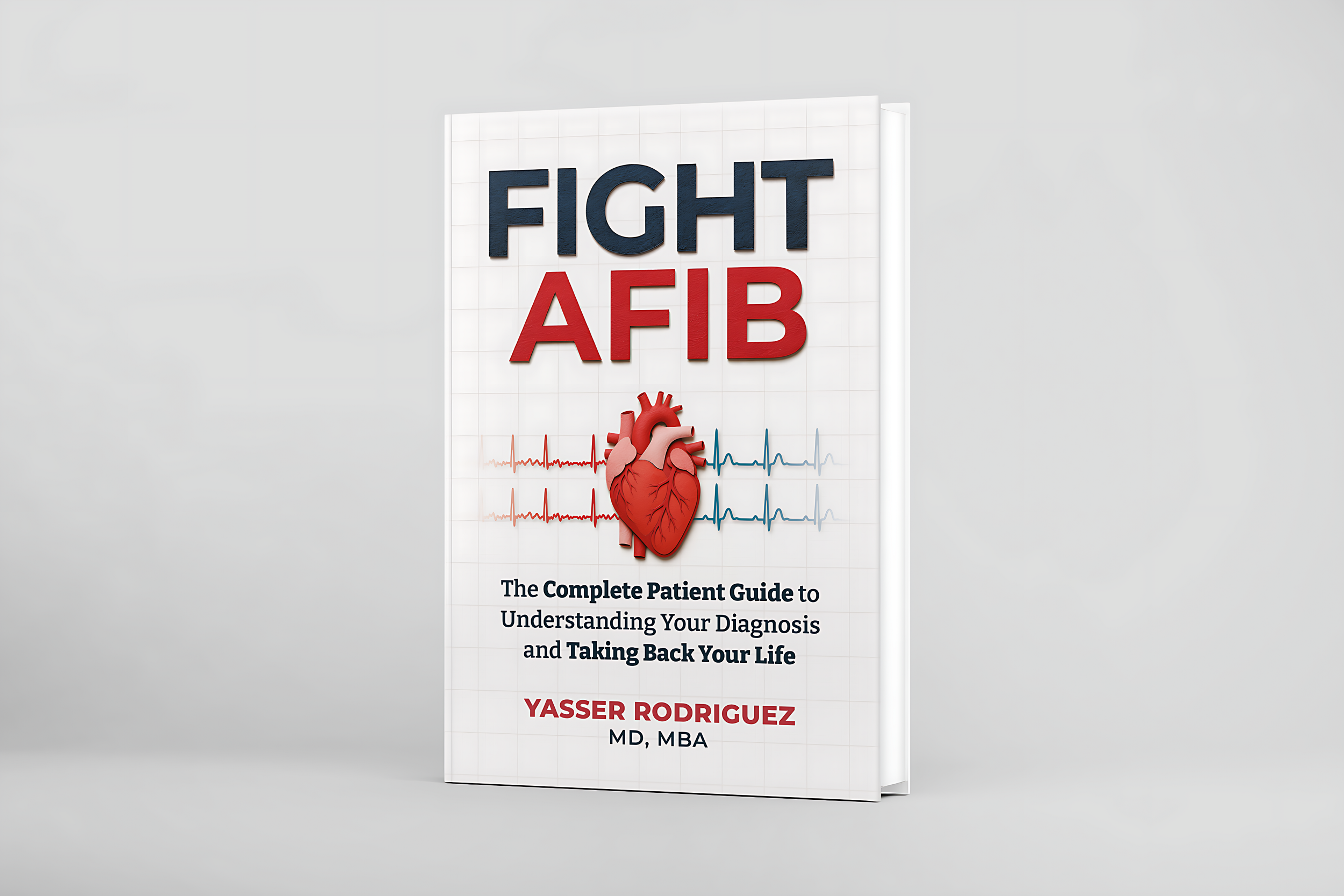
The Complete Patient Guide
Stop Guessing About Your Heart
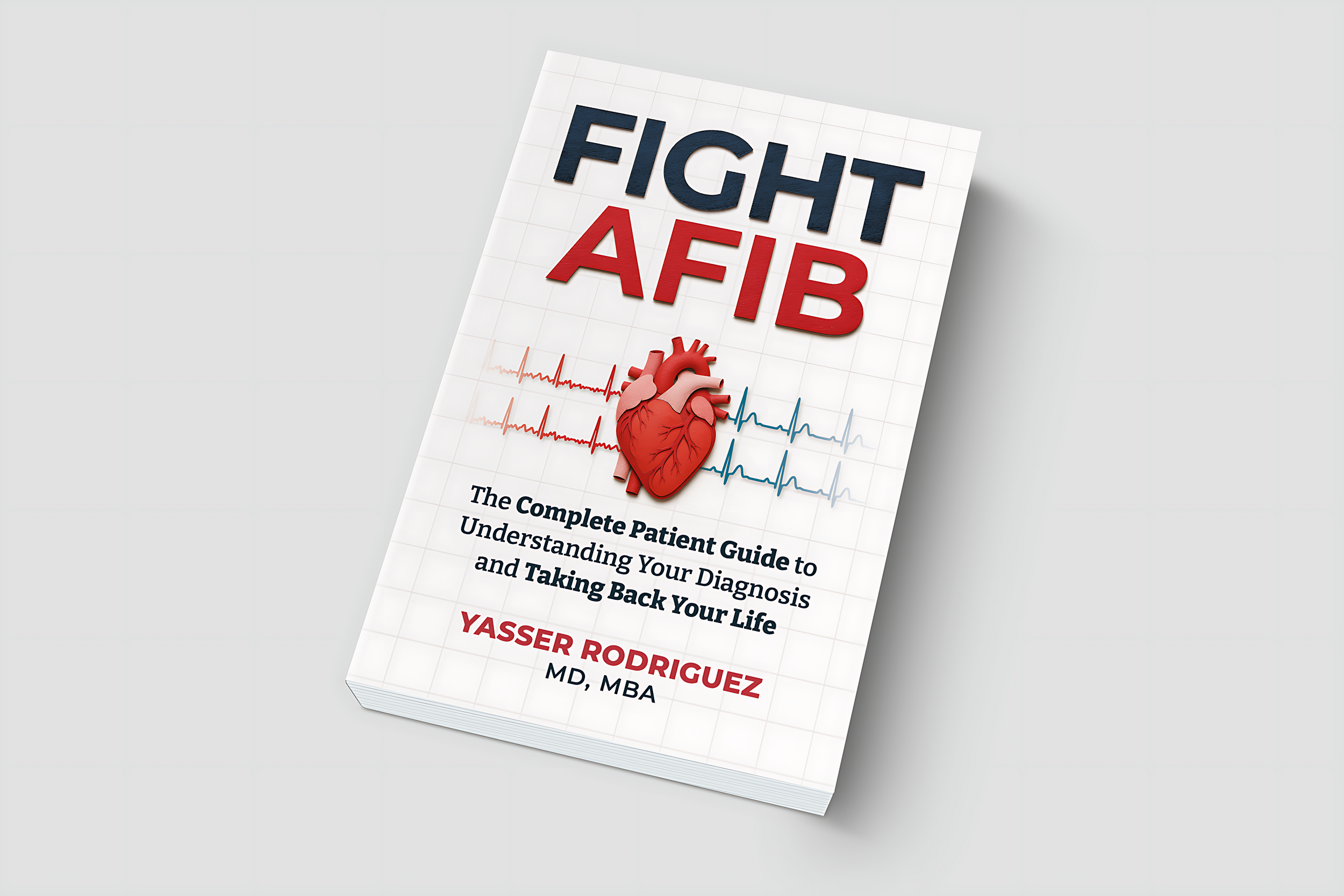
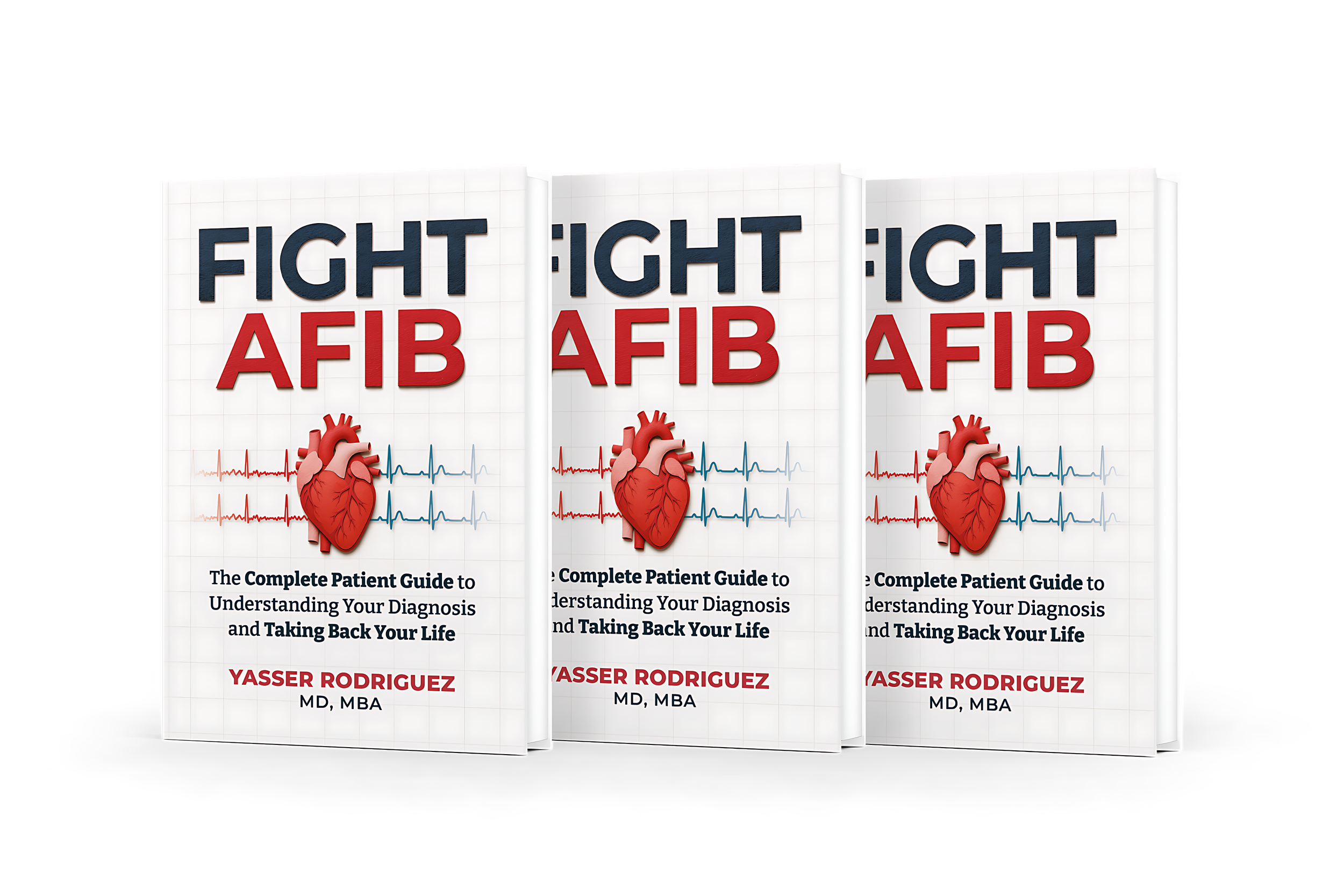
Fight AFib gives you the complete, plain-English guide to understanding your diagnosis and every treatment option available today, straight from a board-certified cardiac electrophysiologist.
You don’t have to figure this out alone, and you don’t have to wait.